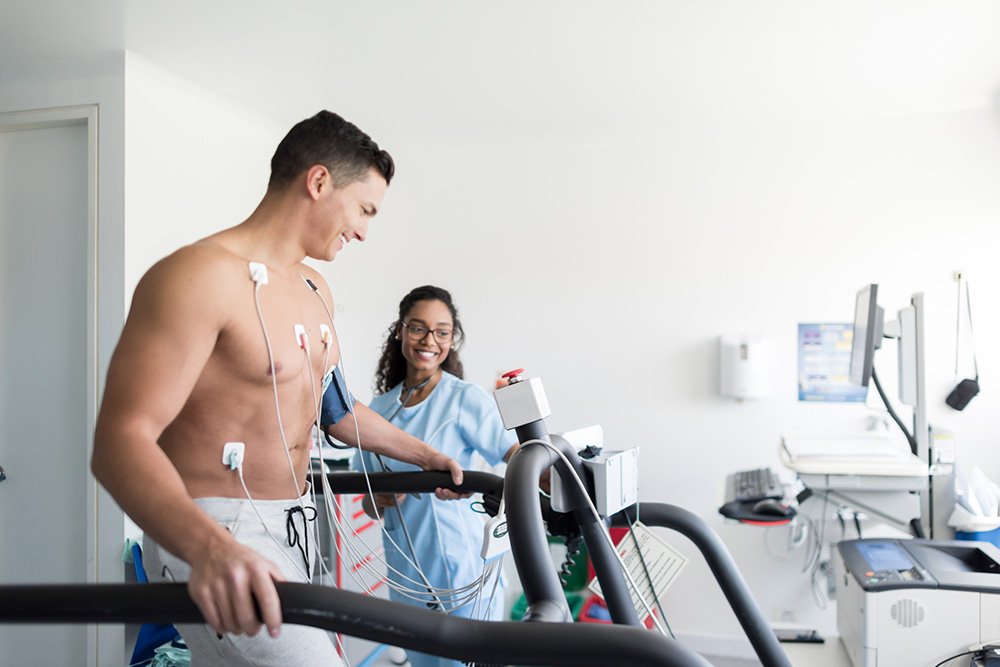
The exercise stress test is an essential tool for evaluating heart function during physical activity, something that cannot be assessed while you are resting. This test helps us understand how well your heart receives oxygen, how it handles workload, and whether any rhythm or circulation issues appear during exertion.
We use the stress test to identify a range of cardiac issues, such as:
During the test, you'll walk on a treadmill that gradually increases in speed and incline. Your heart activity is monitored continuously through ECG leads, and your blood pressure is measured at intervals. Our team closely supervises the entire process to ensure safety and accuracy.
To ensure accurate results, we recommend following a few simple steps. Wear comfortable, supportive clothing suitable for walking, avoid heavy meals for several hours before your appointment, and stay hydrated, but avoid caffeine on the day of your test. If you've noticed specific triggers for your symptoms such as during exercise, stress, or daily activity, make a note of these. This information helps our clinicians interpret your stress test findings more accurately and understand how your symptoms relate to physical exertion.
An exercise stress test can reveal changes that only appear when the heart is working harder. It helps uncover the cause of:
This test allows us to assess blood flow to the heart and detect early signs of coronary artery disease, rhythm issues, or exercise-related cardiac stress.